





Insights from NSW’s largest student drug perception dataset
Friday, 15 May 2026
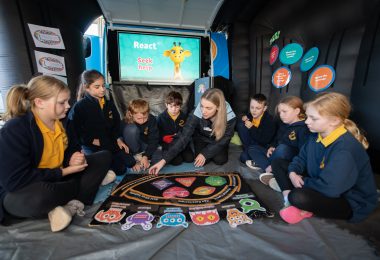
Since 2021, Life Ed NSW has been building one of the most significant datasets of its kind — capturing how young people in Years 7–11 perceive alcohol, vaping and other drug use, and how those perceptions compare to reality.
With over 13,000 students surveyed across five years, the findings reveal a clear and consistent pattern: many young people are making positive, healthy choices – however, they often believe the opposite about their peers.
Across every substance measured, there is a noticeable gap between what students think is happening and what is actually happening.
Young people regularly overestimate how many of their peers are drinking, vaping or using drugs. These inflated perceptions matter – because what students believe is “normal” can directly influence their own choices.
When risky behaviours seem common, they can feel more acceptable. When the truth is revealed, it often tells a very different story.
Vaping: The biggest disconnect
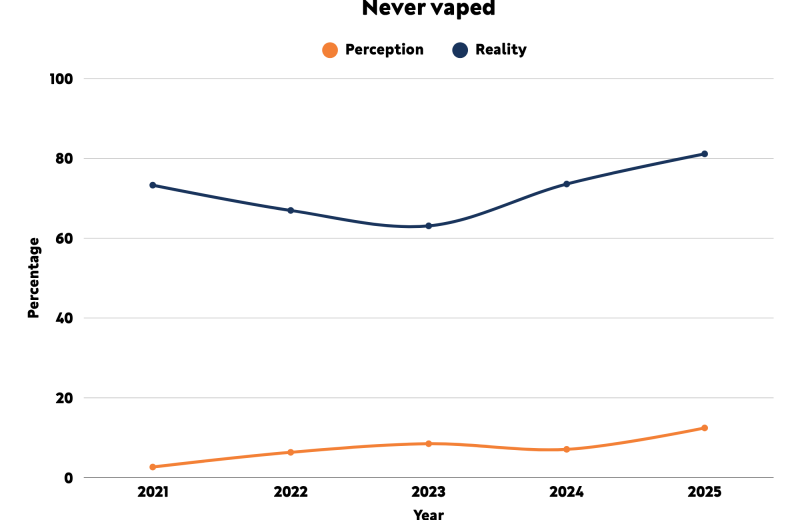
Vaping stands out as the area with the largest mismatch between perception and reality.
Students consistently overestimate how many of their peers vape regularly — likely influenced by social visibility, online content and peer conversations.
But the data tells a more reassuring story:
- 1% of young people have never vaped in 2025
- After a dip during peak vaping trends in 2022–2023, non-vaping rates are rising again
- More students are beginning to recognise that not vaping is the norm, with the perceived rate of weekly vaping dropping from 63.6% to 45.1% in 2025.
At the same time, those who do vape may be experiencing nicotine dependence, highlighting the need for targeted health support alongside prevention education.
Alcohol: perception drives behaviour
Alcohol data reveals a particularly important trend – when perception increases, so does use.
In 2023, when students believed more of their peers were drinking weekly, actual reported use also rose. This highlights how powerful social norms can be in shaping behaviour.
Despite this, the data still shows that:
- 4% of students do not drink alcohol at all in 2025
- A decline in weekly alcohol consumption by 4.7% between 2023 and 2025
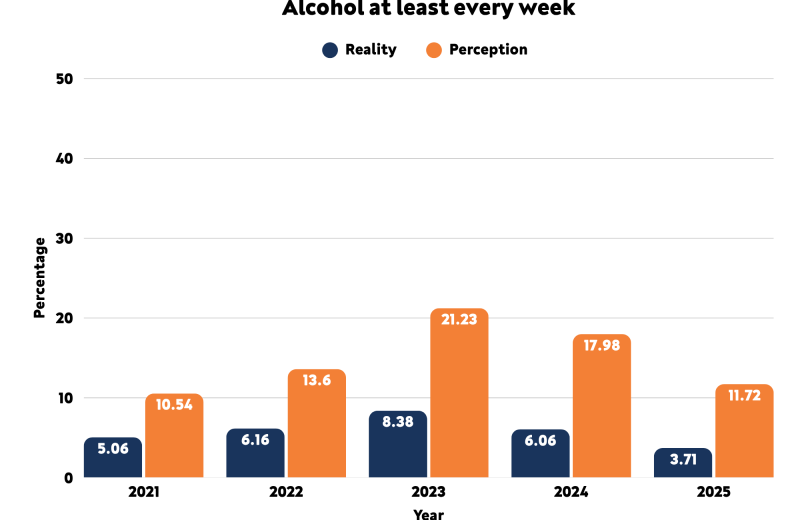
Encouragingly, overall perceptions of alcohol use are beginning to decline — but younger students are increasingly overestimating peer behaviour, signalling a critical window for early intervention.
Cigarettes and cannabis: a more accurate picture
Unlike vaping and alcohol, students tend to have a more realistic understanding of cigarette and cannabis use.
Both substances show relatively stable trends, with:
- Low rates of cigarette use from 3.3% to 2% in 2025, reflecting Australia’s strong tobacco control efforts
- Moderate but controlled perceptions of cannabis use, likely influenced by its legal status and protective factors within schools and communities
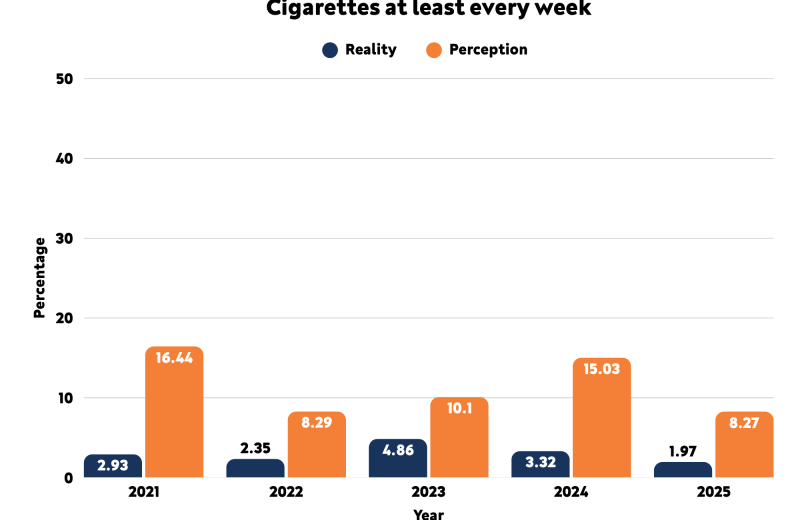
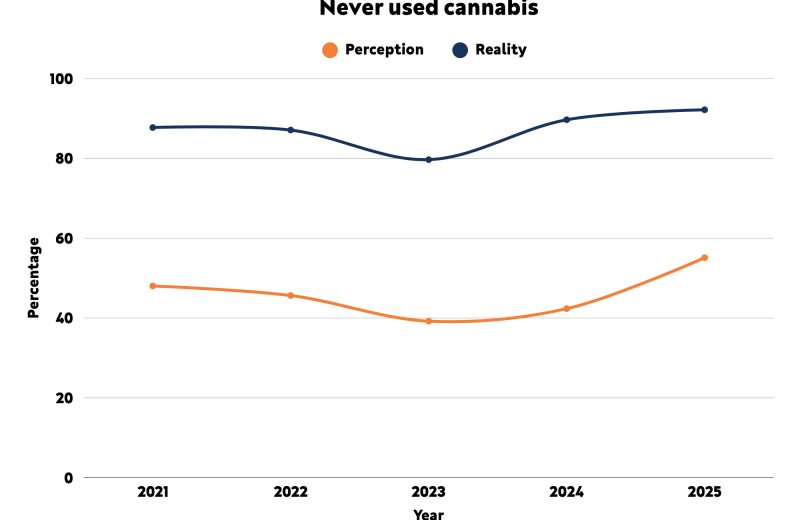
This consistency reinforces the idea that when perceptions are accurate, behaviour is less likely to shift.
Why this data matters
These insights highlight a powerful opportunity: correcting misperceptions can change behaviour.
When young people understand that most of their peers are not engaging in risky behaviours, they are more likely to make safer, healthier choices themselves.
The data also underscores the importance of:
- Early intervention, particularly in Years 7–9
- Strong partnerships between schools and local health services
- Ongoing, large-scale data collection to track trends and emerging risks
As this dataset continues to grow, so too does its value – helping schools, communities and policymakers respond with targeted, evidence-based strategies.