

Life Ed's international advocacy to keep kids safe online
Friday, 10 Apr 2026
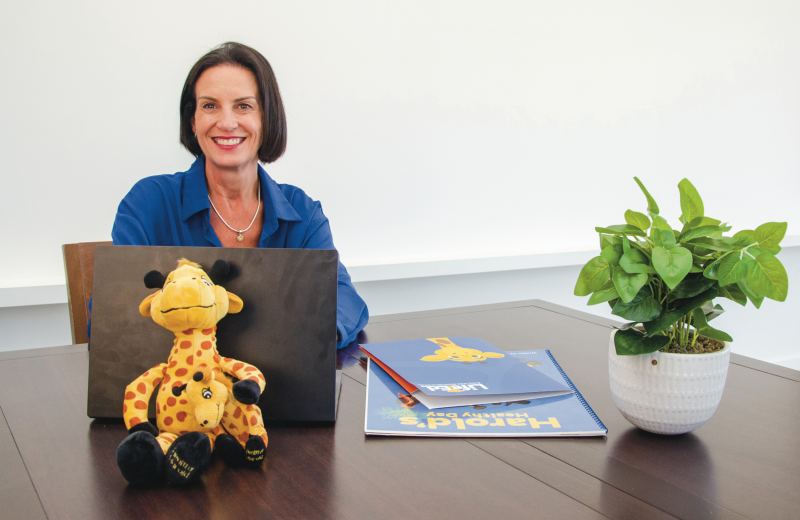
As the online and social media landscape continues to rapidly evolve, Life Ed Australia’s CEO Karen Robertson has addressed an audience of parliamentarians, policy, health and education experts in the UK.
She shared insights on Australia’s world-leading social media delay, as the UK Government considers its response to the growing body of evidence on the impact of social media on children and young people.
Prevention is no longer optional, it is critical. In today’s fast-paced digital world, we have a responsibility to keep up and meet our children where they are.
We must work together to keep our kids safe. Government has an important role in regulating this space, social media platforms need to be held accountable, and education must be delivered earlier.
We must work together to keep our kids safe. Government has an important role in regulating this space, social media platforms need to be held accountable, and education must be delivered earlier.
This comes as Life Ed Australia extends its online safety stream to the early years, launching Harold’s Safe Screen Time with Federal Minister for Education, Jason Clare MP.
Like the Life Ed program, the social media delay is not about restriction. It’s about creating time to educate children when it counts – before they face difficult decisions.
“Just as we introduce complex skills like driving at an age when young people are developmentally ready, and after they receive adequate education and training, we must do the same with social media and the online world,” continued Ms Robertson.
“It’s encouraging to see the level of interest, debate and commitment to child safety and wellbeing in the UK. My one-hour presentation turned into a 90-minute open discussion about the evidence, advocacy, policy drivers and education alignment required for change, and the need to act early to reduce long-term harm.”
As the UK Government continues to face increasing pressure from families, schools and advocacy groups lobbying for change, including our local partners Coram Life Education, this was an important discussion on how groups can work together to influence the policy trajectory to keep kids safe online.
This comes at a pivotal time. Landmark legal cases have been won against tech giants in the US and Mexico, holding social media platforms to account for prioritising addiction over protection. Many countries, like Indonesia, begin to roll out their social media restrictions as the world watch on with great interest. On our shores, the eSafety Commissioner Julie Inman-Grant issued a report on the progress achieved in the three months since Australia’s social media delay legislation was introduced.
“There have been positive steps forward. However, it is concerning that it has revealed a number of major compliance issues and in some cases, intentional manipulative tactics by social media platforms who have a vested interest inkeeping kids scrolling through their algorithms,” shared Ms Robertson.
“It is shocking. It is dangerous, as evidence continues to grow on the impact of social media on young minds. A decline in mental health, academic performance, and capacity to form healthy relationships are among the significant risks in play for our next generation.”
Ms Robertson, who is also Vice President of the Australia Parents Council, has been actively involved in Australia’s national conversations on children’s wellbeing in digital environments for a number of years, including presenting evidence at the Senate Inquiry into the impacts of social media on young Australians that led to the social media delay.
Life Ed Australia is a proud Trusted eSafety Provider and developed one of the country’s first online safety education modules in 2016. Since then, the team and iconic Healthy Harold have expanded this offering to include important educational touchpoints across each year of primary school and into the early years because of rising concerns and the clear need.