




Starting big school: How to support your little learner through a big change
Tuesday, 20 Oct 2026
Starting primary school is an exciting milestone for children and their families. There are new friends to make, new things to discover and plenty of adventures ahead. But alongside the excitement, it’s natural for little learners to have questions, worries or mixed feelings about what lies ahead.
For preschoolers, the transition from early learning to primary school is one of life’s biggest changes so far. With a little preparation, reassurance and plenty of opportunities to talk, parents and carers can help children approach this next chapter with a greater sense of belonging, curiosity and anticipation.
Every child experiences change differently
Some children can’t wait to put on their school uniform and explore their new classroom. Others might feel nervous about being away from familiar educators, making friends or not knowing what to expect.
There’s no single right way to feel about starting school. Children may move between excitement and uncertainty, sometimes within the same day. Acknowledging these feelings helps children understand that it’s okay to feel a little unsure when something is new.
Try asking open-ended questions such as, “What are you looking forward to about school?” or “Is there anything you’re wondering about?” Listen to their answers without rushing to solve every concern. Reassure them that it’s okay to ask questions and that there will be adults at school to help them.
Building confidence through everyday experiences
Children don’t need to have everything figured out before their first day. Instead, small, everyday experiences can help them become familiar with the changes ahead and develop skills that support their growing independence.
Here are four simple ways to help your child prepare:
- Talk about what to expect. Read books about starting school, chat about what a typical day might look like and explore the school grounds together if you can. Familiarity can help make the unknown feel less daunting.
- Practice every day routines. Give your child opportunities to practice putting on their shoes, opening their lunchbox, packing their bag and managing their belongings. These little achievements can help them feel more capable and prepared.
- Encourage independence at their own pace. Allow time for your child to try things themselves, offering support when needed. Whether it’s asking for help, following simple instructions or having a go at a new task, these experiences can build valuable skills for the classroom.
- Remind them they belong. Talk about the people who care for them and explain that their teacher and other trusted adults will be there to support them. If your child feels worried, remind them that asking for help is always okay.
Helping little learners embrace the change
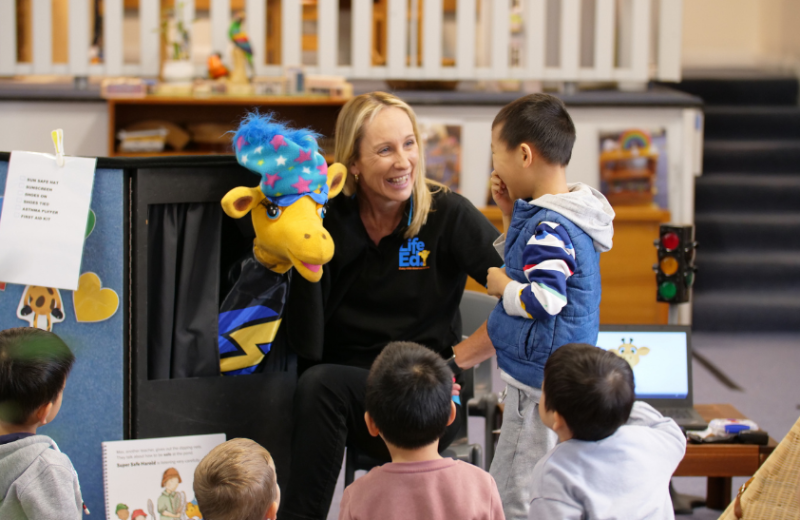
At Life Ed, we know that supporting children’s health and wellbeing starts early. That’s why we’ve introduced Harold’s Big School, our newest Early Years Learning module, designed to support children as they transition from early learning to primary school.
Through shared storytelling, music, songs, play and hands-on activities, children explore what it means to start school in a fun, age-appropriate and supportive environment.
The interactive session helps children practice helpful classroom behaviours, foster independence, develop positive perspectives on change and explore the concept of belonging. It also reinforces the reassurance that they’ll have people around them to help throughout the transition.
The learning doesn’t stop when the session ends. Educators can access supporting resources and suggested activities to continue the conversations, giving children more opportunities to explore their thoughts and build familiarity with the changes ahead.
A little reassurance goes a long way
Starting school is a journey, not a single moment. Children benefit from having time to ask questions, express their feelings and discover what this new experience might look like.
By keeping conversations open, celebrating small steps towards independence and reminding your child that support is always available, you can help them approach this milestone feeling understood and supported.
With the right encouragement, your little learner can begin to see big school not just as a big change, but as an exciting opportunity to learn, grow and belong.